
Back in late 2024, the remarkable synergy between Epic Games and The Game Awards once again placed Fortnite's creative community in the spotlight. A dedicated island inside the game became a hub of celebration, competition, and player-driven recognition. In the years since, that event remains a defining moment for user-generated content in one of the world's most dynamic battle royale ecosystems.
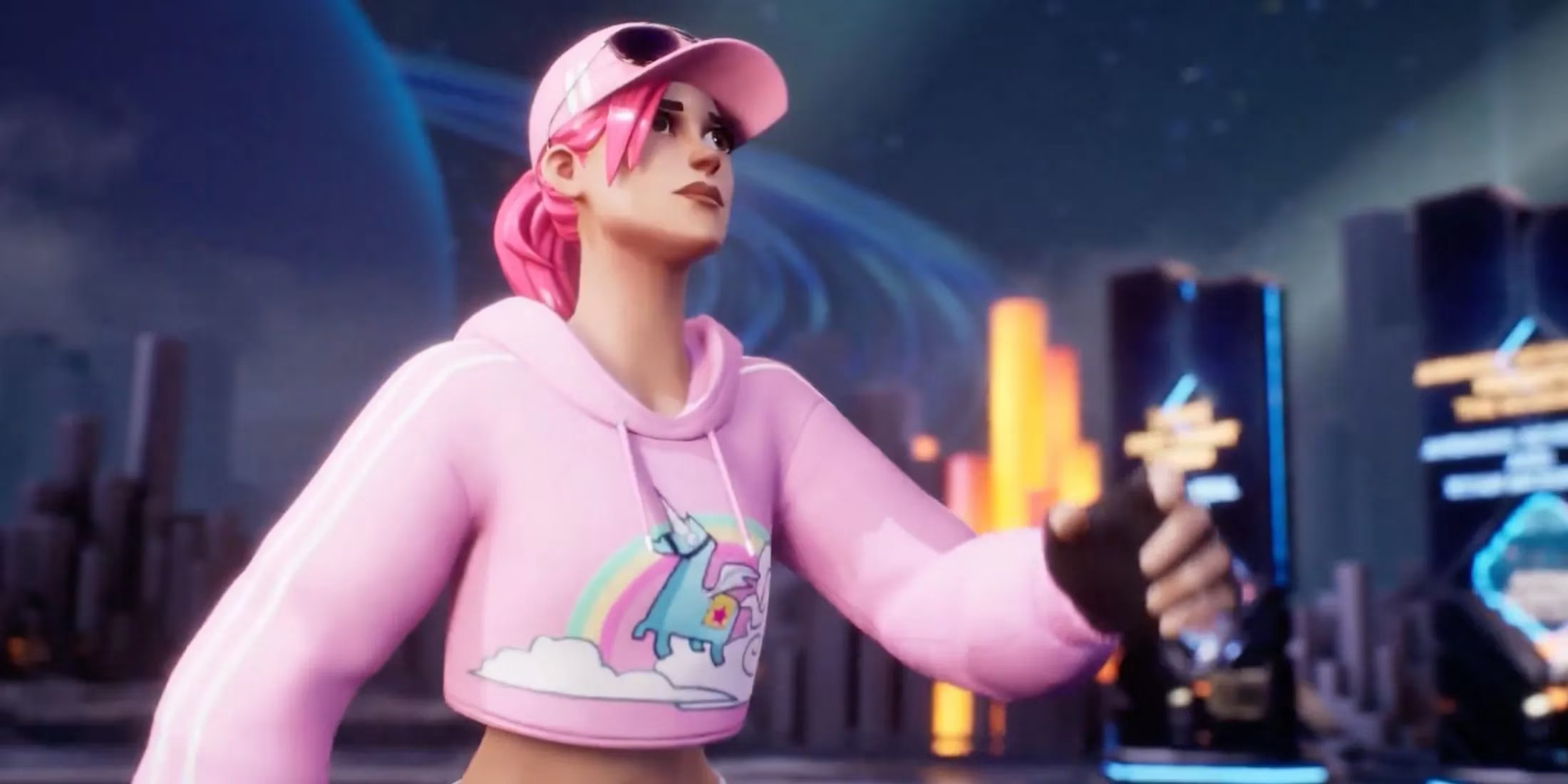
As December of 2024 approached, anticipation for The Game Awards reached a fever pitch. Geoff Keighley, the perennial host, had promised a show “bigger than ever” — and Fortnite was central to that promise. From the final days of November until December 11 at 9 PM ET, anyone could load into the specially designed The Game Awards Island and participate in a unique democratic process: voting on the very best Fortnite islands of the year. This marked the second consecutive year of partnership between Epic Games and the awards show, and the scope had grown substantially.
The island itself was more than just a polling station. Creators had woven in a shooting gallery mini-game that tested players’ targeting skills under pressure. A countdown timer pushed participants to race for the highest possible score, adding a layer of arcade excitement that contrasted with the deliberative act of casting a vote. This dual-purpose design reflected Fortnite’s enduring philosophy—engagement through variety, and personalization through player agency.
For years, Fortnite has championed player expression with an ever-expanding catalogue of skins, backblings, and transformative weapon pools. But nothing embodies this commitment more tangibly than its Creative mode and the Unreal Editor for Fortnite (UEFN). These tools turned players into architects, allowing them to build bespoke maps, competitive arenas, narrative adventures, and social spaces entirely within the Fortnite client. By the end of 2024, thousands of islands had been published, ranging from faithful recreations of classic video game levels to wholly original gameplay modes that blurred the line between developer and consumer.
The voting initiative during The Game Awards 2024 served as both a celebration and a showcase. Islands competing for top honors spanned multiple genres. ✨ Tycoon experiences, escape rooms, team deathmatch reinterpretations, and narrative-driven quests all jostled for supremacy. The community’s vote carried weight, but it also reflected the shifting tastes of a player base that had grown up alongside Fortnite. No longer satisfied with purely mechanical innovations, voters gravitated toward islands that told stories, fostered social connection, or delivered unexpected emotional resonance.
Epic Games had masterfully timed the event. Fortnite Chapter 2 Remix was wrapping up, and the imminent arrival of Chapter 6 fueled a sense of transition. Leaks and teasers pointed toward the next era’s direction: fresh crossovers, altered map geometry, and a reset of the battle royale formula. In the midst of this uncertainty, the Game Awards Island offered a moment of communal reflection. Before diving into the unknown, players could honor the creativity that had defined the preceding months. 🌟
The live show itself took place on December 12, just one day after voting concluded. During the broadcast, winners were revealed, often accompanied by short video packages that gave millions of viewers a glimpse into the minds of the creators. The Game of the Year category that year was especially compelling, with giants like Elden Ring: Shadow of the Erdtree and Black Myth: Wukong standing beside the indie phenomenon Balatro. And yet, for many Fortnite devotees, the most gripping segment was the recognition of user-created islands—a testament to how firmly community-driven content had embedded itself in the broader gaming conversation.
Looking back from 2026, the 2024 collaboration between Fortnite and The Game Awards stands out for multiple reasons. It consolidated trends that had been building for years: the ascent of UEFN as a serious creative platform, the growing influence of creator economies, and the appetite for live-service games to function as cultural frameworks rather than static products. In subsequent seasons, Epic continued to iterate on these awards-style integrations, occasionally partnering with other industry events to let players directly shape which islands gained visibility.
The shooting gallery from that December, though a small piece of the overall puzzle, left a particular impression. It distilled Fortnite’s gunplay into a pure score-attack format, pushing players to master flick shots and target prioritization. High-score chasers shared clips across social media, inadvertently marketing the island and increasing turnout for the voting portion. This blend of competition and curation became a blueprint for future in-game events.
Today, the islands that rose to the top in 2024 are still discoverable, often backlinked in YouTube retrospectives or featured in Fortnite’s own legacy playlists. Some creators parlayed their victories into larger audiences, founding studios or partnering on official Epic projects. Others simply continued crafting, empowered by the knowledge that their work mattered to the community at large. The Game Awards Island, meanwhile, has become a nostalgic touchstone—a place that existed fleetingly but epitomized the democratic, unpredictable spirit of Fortnite’s golden era of creator content.
The 2024 event also highlighted accessibility. Voting required nothing more than loading the island and interacting with clearly marked terminals. No external registration, no paywall. In a year when so many gaming discussions revolved around barriers to entry, Fortnite kept the process frictionless. It was a reminder that, for all its commercial scale, the game could still feel intimate and player-led.
In the end, the partnership between Epic Games and The Game Awards did more than crown a few winners. It validated the idea that players themselves are the truest curators of what’s meaningful inside a sprawling virtual universe. As Fortnite continues to evolve in 2026, that lesson echoes in every Creative lobby, every discovery tab update, and every Saturday morning spent jumping between strange, wonderful islands built by people who simply love to create. 🚀