
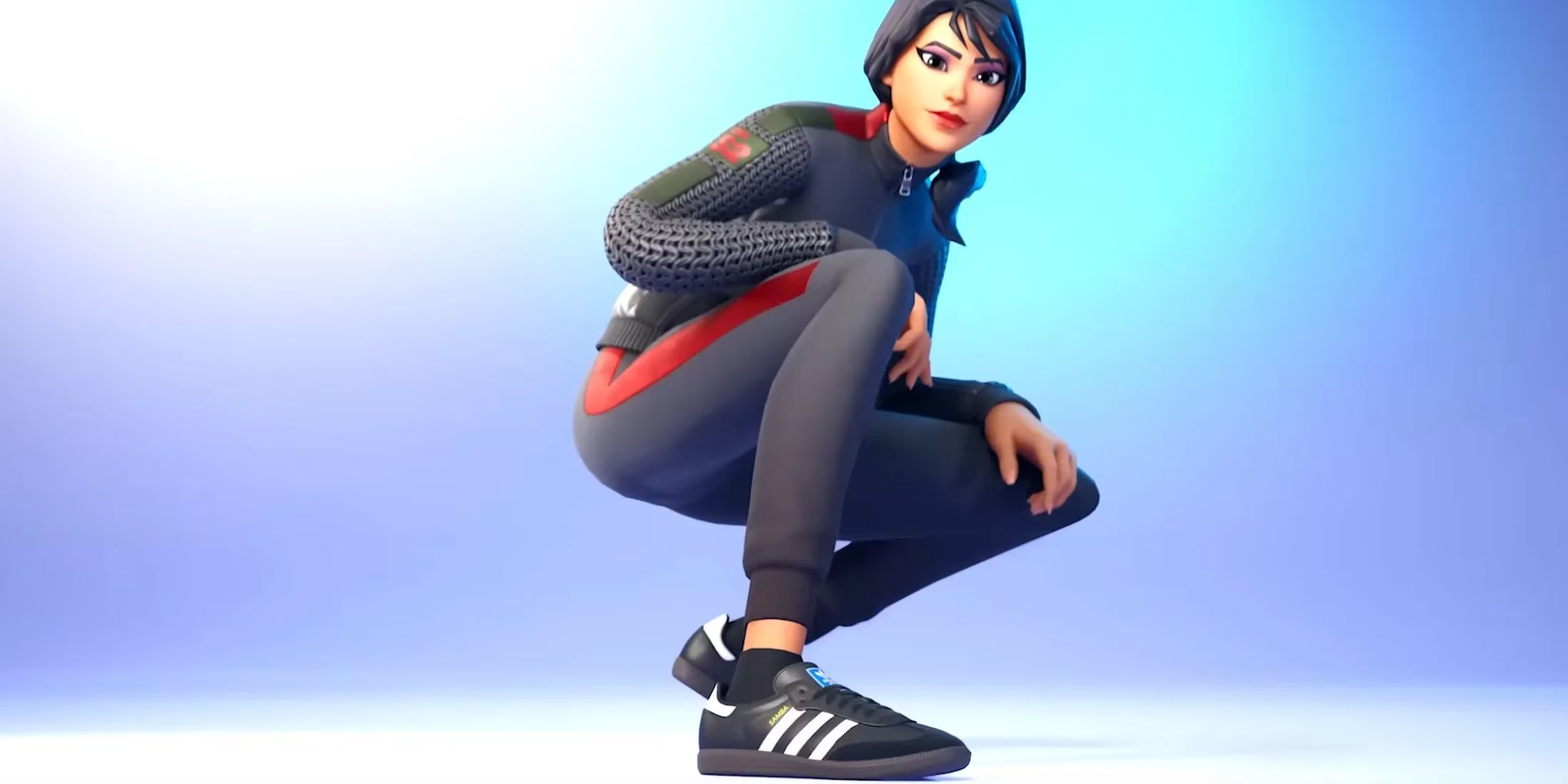
As Fortnite continues to evolve in 2026, a persistent point of contention within its vast community revolves around the Kicks cosmetic category. Initially introduced in late 2024, these virtual footwear items have consistently sparked debate over their value proposition and customization limitations. With the game's ecosystem constantly expanding through new seasons and collaborations, players are increasingly vocal about their desire for more flexible purchase options, particularly through the implementation of edit styles, which would allow for color variations and personalization of a single purchased item. The discussion highlights a growing expectation for player agency in cosmetic transactions within one of the world's most popular live-service games.
The Core of the Controversy: Price vs. Value
The primary grievance from the Fortnite player base centers on the perceived high cost of Kicks relative to other cosmetics. These digital sneakers and shoes typically command a price between 600 and 1,000 V-Bucks. For context, this price range often overlaps with or even exceeds the cost of full character outfits, which can be purchased for around 800 V-Bucks. This pricing strategy has led a significant portion of the community to question Epic Games' sales approach, feeling that standalone footwear does not offer equivalent value to a complete character skin. The frequent flooding of the Item Shop with new Kicks releases, often from high-profile brand collaborations, has only intensified these criticisms, as players feel pressured by a continuous cycle of premium-priced items.
The Edit Style Precedent and Player Frustration
The debate reached a new peak when Epic Games introduced the first-ever edit style for a Kicks item: the Fluffy Buns slippers. This original Epic creation was updated to allow players to choose between pink and blue color variants after purchase. This move set a powerful precedent, demonstrating that technical and design frameworks for Kicks edit styles were feasible. However, it also inadvertently fueled player frustration when subsequent releases, particularly licensed collaborations, lacked this feature.
A poignant example cited by the community involves the Air Jordan 11 "University Blue" and Air Jordan 11 "Legend Blue" Kicks. These Nike sneakers are functionally identical in model, differing only in color. Yet, instead of being offered as a single item with an edit style toggle, they were sold separately for 1,000 V-Bucks each (or bundled together for 1,500 V-Bucks). Players like AbiDextrous_ on Reddit have pointed out this discrepancy, arguing that the Fluffy Buns model should be the standard, allowing for color customization within a single purchase. The community's reaction has been a mix of understanding and disappointment:
-
😠 Frustration: Many players accuse Epic of implementing a deliberate monetization strategy to maximize revenue by selling nearly identical items separately.
-
🤔 Speculation: Others theorize that licensing agreements with major brands like Nike may restrict how their products are implemented, potentially requiring each colorway to be treated as a unique, standalone SKU.
-
✨ Hope: The Fluffy Buns update proves the system can work, giving players hope that future original or renegotiated collaborative Kicks might include edit styles.
The Role of Brand Collaborations
The expansion of the Kicks catalog has been heavily driven by high-profile brand partnerships. Following the Nike collaboration, Fortnite debuted Adidas Kicks, adding another titan of the sneaker world to the game. While these collaborations generate excitement among sneakerhead gamers, they also complicate the edit style issue. As licensed crossovers, the final implementation details—including pricing, bundling, and customization options—are subject to agreements between Epic Games and the brand partner. A company like Nike or Adidas may insist that each color variant of a iconic sneaker is treated as a distinct product to maintain brand integrity and perceived value, even within a virtual space. This contrasts sharply with Epic's own original designs, like the Fluffy Buns, where the developers have complete creative and commercial control.
Community Sentiment and Future Expectations
Despite the ongoing criticisms regarding cost and lack of customization, there remains a dedicated segment of the player base, particularly sneaker enthusiasts, who are excited to see more real-world footwear brands represented in Fortnite. The desire for cool, branded virtual kicks is undeniable. However, the overarching community feedback as of 2026 is clear: players want more fairness and flexibility. The current model feels like a missed opportunity for deeper customization and player satisfaction.
Epic Games has remained notably silent on the specific feedback surrounding Kicks pricing and edit styles. This silence leads some players to pessimistically believe no major changes are forthcoming. However, the precedent set with an original Epic design demonstrates the capability is there. Moving forward, the community hopes to see:
-
More Edit Styles for Original Kicks: Expanding the Fluffy Buns model to other Epic-created footwear.
-
Negotiated Flexibility with Partners: Advocating for edit style inclusions in future collaboration contracts.
-
Revised Pricing Tiers: A reassessment of V-Buck costs to better align Kicks with the value of other cosmetic types.
In conclusion, the Fortnite Kicks saga is more than a debate about virtual shoes; it's a reflection of player expectations in a modern gaming economy. As live-service games like Fortnite continue to blend gaming with fashion and brand culture, the demand for consumer-friendly practices, such as customizable edit styles, will only grow louder. Whether Epic Games and its brand partners adapt to this demand in 2026 and beyond remains one of the intriguing subplots in the ongoing evolution of the battle royale giant.