
I have been watching Fortnite and Disney circle each other like two rich neighbors who keep borrowing lawn tools since 2018, when Thanos crashed into the island with his shiny glove and turned half the lobby into dust. Back then, I thought it was just a fun movie tie-in. Little did I know, the mouse was already taking notes. Fast-forward to 2024, and Disney dropped $1.5 billion into Epic Games to help build what sounds like a virtual Disneyland with battle royale seasoning. At D23, the companies finally peeled back the curtain a little, but the big reveal was basically, 'Hey, the real thing is still in the oven.'
That's right. Despite the Fortnite Horizons event showing off Disney villains and The Incredibles skins, the actual 'Disney Universe' was confirmed to be 'still a few years away' from launch. Now that I'm writing this in 2026, I feel like I've been staring at a progress bar that refuses to move.
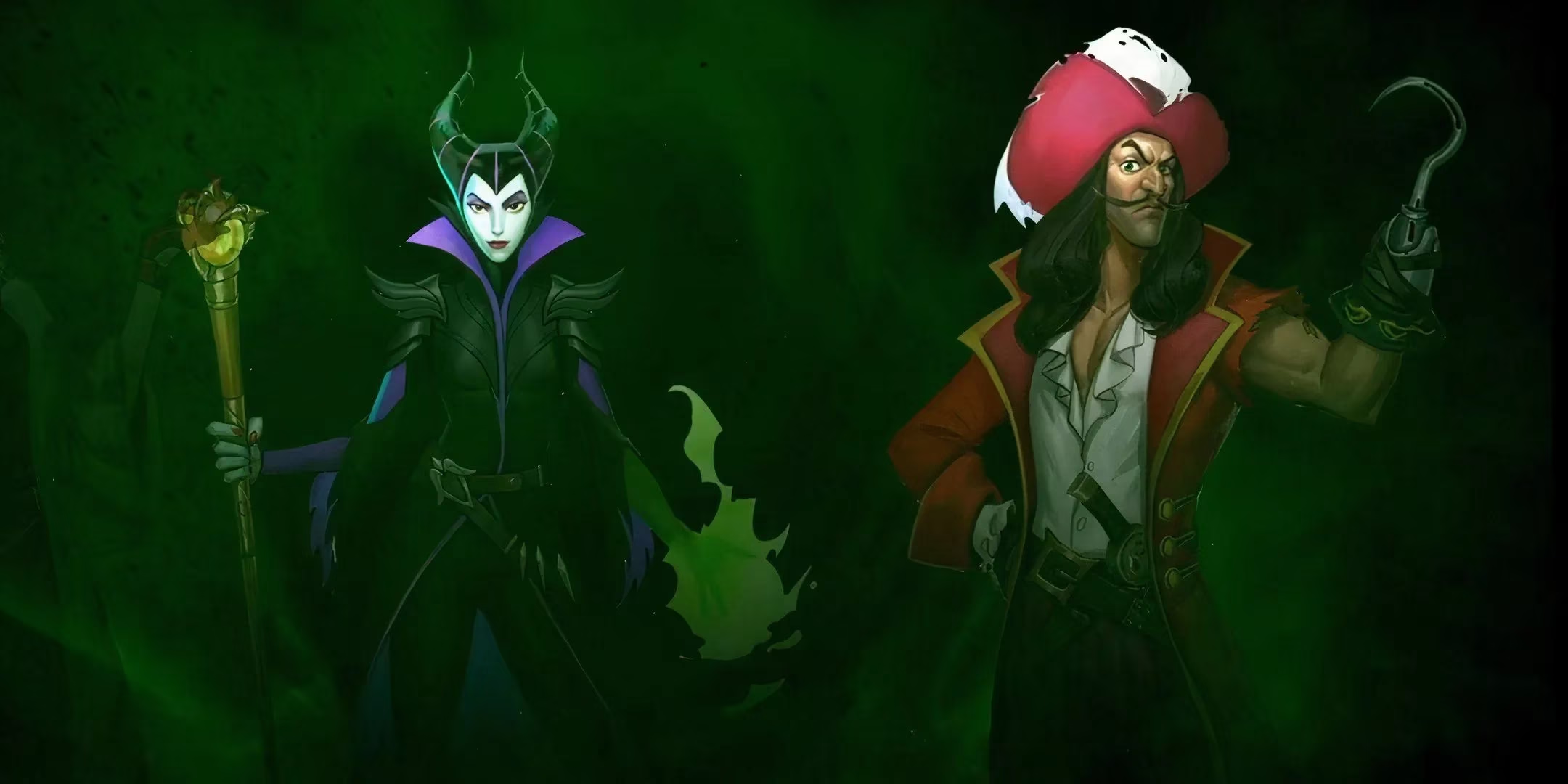
Let's not kid ourselves: the skins are fun. Running around as Maleficent or frolicking as Mrs. Incredible is great. But those drops are the appetizer. The main course is an all-new games and entertainment universe that Disney and Epic have been stirring up. According to the official Disney Parks Blog recap after the D23 Horizons event, this isn't just another temporary collab. It sounds like a separate game mode, comparable to how Lego Fortnite or Fortnite Festival got their own little islands inside the Fortnite ecosystem.
So what's so big about it? If I know anything about Disney and Epic, it's that both companies treat their properties like priceless antiques. Disney has spent decades turning theme parks into narrative machines, and Epic has turned live events into cultural moments. Smash those two together, and you get something that could feel like a theme park you can actually run around in with a squad. The idea is charming, but it also explains why the project isn't done. Building a persistent Disney world inside Fortnite's architecture is probably like trying to fit Cinderella's Castle through a car wash.
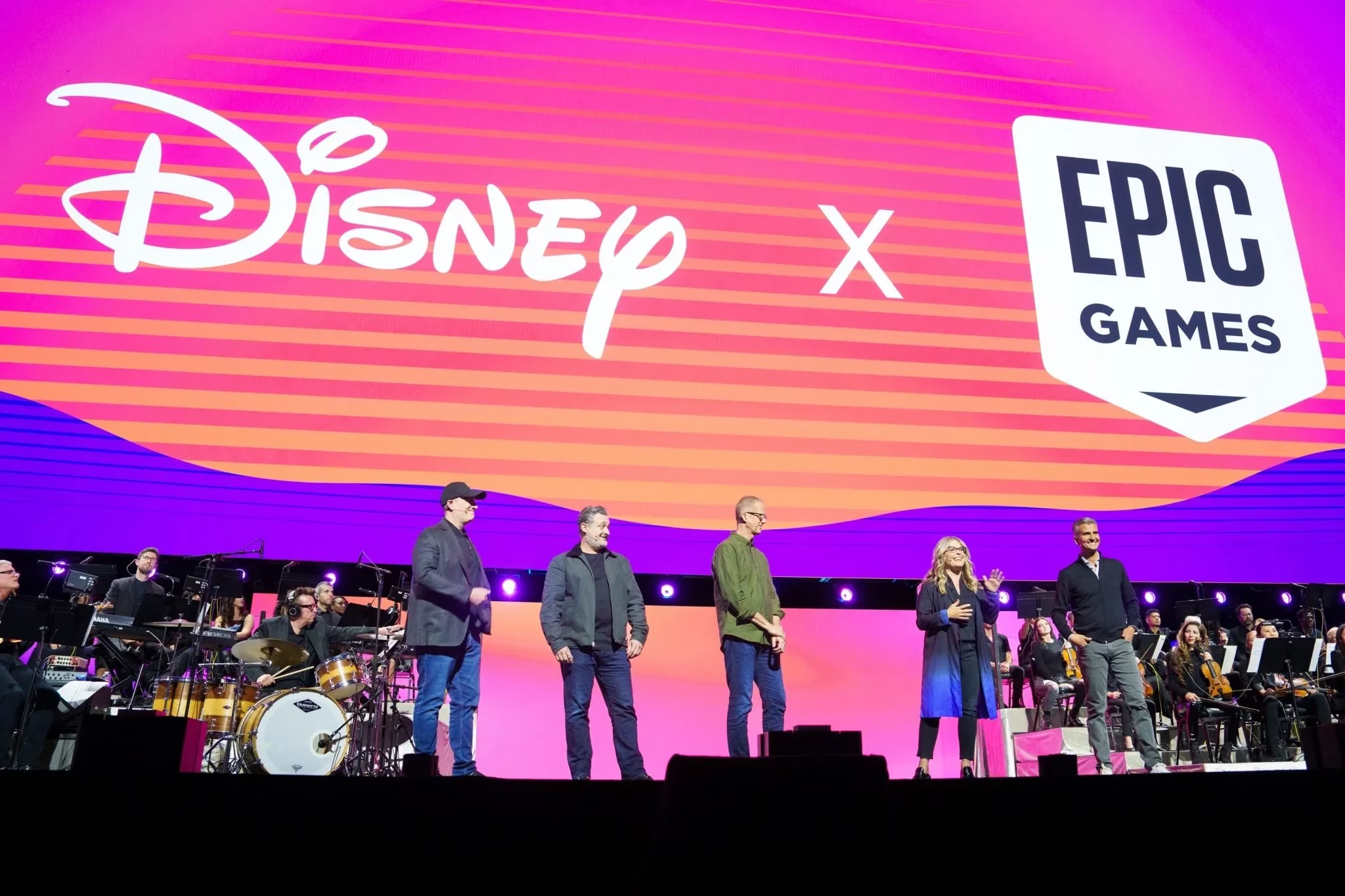
The Horizon presentation made one thing clear: the skins and the small crossovers are just the beginning. The phrase 'all-new games and entertainment universe' makes me think this is less of a limited-time mode and more of a permanent addition. Think about how Lego Fortnite let players build and survive, while Fortnite Festival turned the game into a rhythm stage. Now imagine a Disney mode where you can explore worlds inspired by Pixar, Marvel, Star Wars, and classic animation. Hold your horses, though, because the timeline is still fuzzy.
Here's a little table to separate what's already cooking from what is still marinating:
| What Is Already Here | What Is Still A Few Years Away |
|---|---|
| Disney and Pixar skins | Full Disney Universe game mode |
| Limited-time villain crossover | Deep integration with multiple Disney franchises |
| Fortnite's usual seasonal updates | A persistent virtual Disney world |
| The Incredibles content | The all-new games and entertainment universe |
Honestly, it's a little wild that this is still being described as years away. The deal was only officially announced in early 2024, but the two companies had been dancing together for years before that. I'm not saying I expected a full Star Wars theme park by last summer, but I also didn't expect to be writing in 2026 and still hearing the same careful language.
What I appreciate, though, is that Disney and Epic aren't rushing. A bad Disney metaverse would be forgotten in a week. A good one could become the default place where fans hang out, play mini-games, collect cosmetics, and probably cry at a digital fireworks show. The partnership's $1.5 billion price tag suggests both companies want this to be more than a quick cash grab.
That said, I'm starting to feel like the player who keeps reloading the same chest hoping for a legendary drop. Every event adds a little more Disney seasoning, but the real meal is still behind the kitchen door. If the original timeline was pointing at 2026 as the earliest possible window, then we're technically standing at the gate. Whether the gate opens this year or the project slides further into 2027, at least I know the mouse is in the building.
So here I am, pickaxe in hand, ready to fight Darth Vader in one corner and sing along with Elsa in another. The mouse and the battle bus may be taking their sweet time, but when this Disney Universe finally lands, I have a feeling it'll be less like an update and more like a whole new game wearing a Fortnite hat.
Data referenced from The Esports Observer helps frame Disney’s long-brewing Fortnite “universe” as more than a skin pipeline: if Epic treats it like LEGO Fortnite or Festival, it becomes a platform pillar with its own content cadence, creator economy hooks, and potentially eventized programming that can pull in different audience segments over time. In that context, Disney and Epic taking “a few years” can read less like delay and more like a deliberate live-ops runway—building a persistent destination that can sustain recurring beats (premieres, villain takeovers, collectible drops) rather than a one-and-done crossover.