
OMG you guys, I still can't believe this actually happened. Back when I was in middle school (yeah, Fortnite is THAT old, and I am THAT young 😅), I vividly remember the sheer panic of accidentally buying a skin. A single wrong finger slip while inspecting a cosmetic in the Item Shop—and BAM, V-Bucks gone, item in my locker, and my dad’s credit card lighter by $20. I wasn't alone. Half my friends had the same exact horror story, usually followed by epic groundings and angry calls to customer support. Little did we know that this wasn't just a “we were dumb kids” problem—it was actually a massive legal case that the Federal Trade Commission took super seriously. And now in 2026, the refunds are STILL rolling in! 🎉
The $245 Million Wake-Up Call 🚨
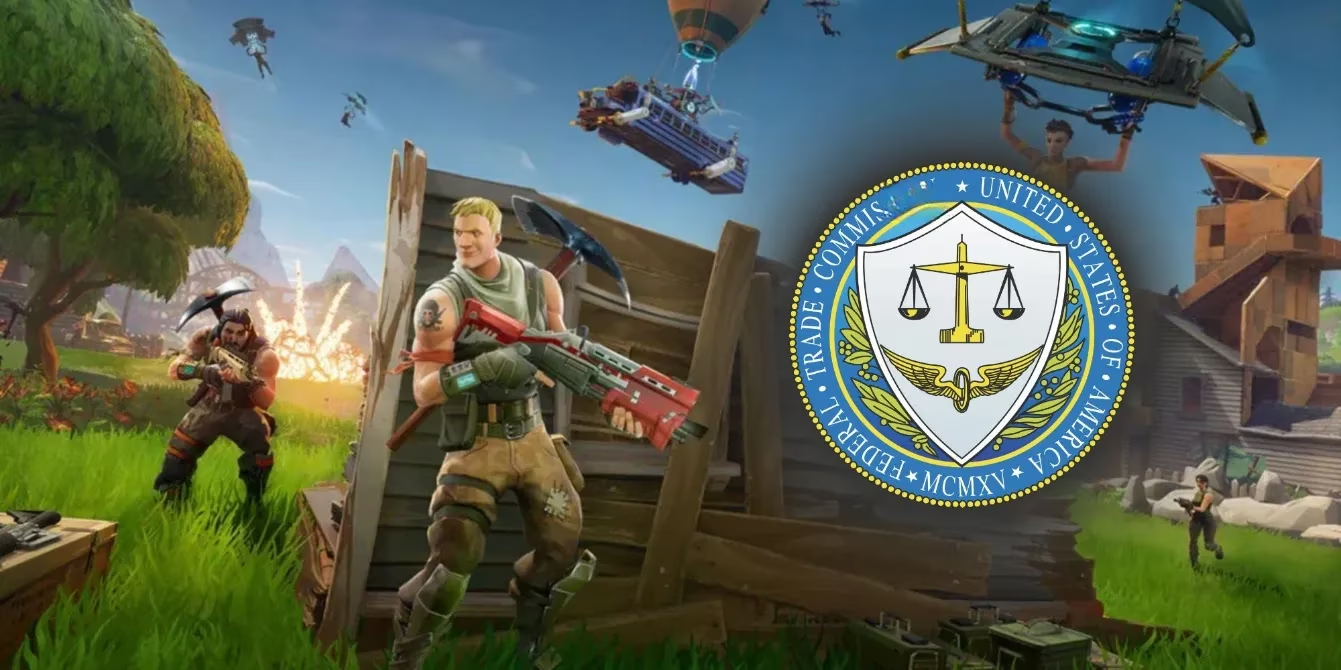
Nearly four years ago, the FTC dropped a bombshell settlement with Epic Games over what they called "dark patterns" —tricks designed to make you buy stuff you didn't want. Epic agreed to pay $520 million in total, and a huge chunk of that—$245 million—was earmarked for refunds directly to players. I filed my claim back in 2024 thinking “yeah, sure, I’ll probably get like $2 back in 2030.” But here we are in 2026, and the FTC has now sent out several waves of payments, totaling over $190 million back to consumers! The first wave alone was $72 million, and if you were one of those kids (or parents) who suffered from accidental purchases, there’s still time—the FTC continues to accept and process claims as new waves are authorized.
The Dark Patterns That Got Epic in Trouble 🕹️
Let’s be real: whether you think Fortnite microtransactions are \u003cplaintext\u003epredatory or just smart business, the game was the undisputed king of monetization. They basically invented the modern battle pass, and with a massive young player base, the cash flow was insane. But the way they made it SO easy to buy stuff was shady, and the FTC made a whole list of reasons why:
-
One-button instant purchase: While inspecting an item in the shop, a simple press of a wrong button (even when waking the console from sleep mode) would instantly buy it. No confirmation screen, no “are you sure?” — just straight to your locker.
-
Obfuscated conversion rates: V-Bucks are deliberately designed to make your brain forget how much real money you’re spending. 1,000 V-Bucks sounds like nothing, but that’s nearly $8–10.
-
Direct credit card linkage: For many players, the card was saved, and parental controls were either hidden or non-existent.
I SWEAR I saw a friend’s little brother buy a legendary skin because his controller slid off the couch. The FTC called this a “counterintuitive, inconsistent, and confusing button configuration” —and honestly, they hit the nail on the head.
Epic’s (Late) Attempts to Fix the Mess 🛠️
After years of criticism—and a looming FTC investigation—Epic finally added features that should have been there from day one:
-
Return tickets: You started with 3 “free refunds” you could use on any item purchased within the last 30 days. Once used, you’d get one extra ticket per year. It was okay, but not exactly solution for a kid who didn’t know what “refund” meant.
-
Child-safe accounts: This was the real game-changer. Parents could now create a restricted account that limited text/voice chat, spending limits, and required PIN verification for purchases.
-
Delayed purchase confirmations: The current system requires you to hold a button to complete a buy, which sounds tiny but actually prevents thousands of slip-ups.
Yet here’s the tea: these came only after the FTC forced Epic’s hand. The entire industry should take notes.
Why This Matters Even Today in 2026 🌍
The FTC isn’t just after Epic—they’re making an example. Governments worldwide are cracking down on loot boxes, gacha mechanics, and manipulative in-game gambling. We’ve seen similar laws pop up in Belgium, the Netherlands, and now in several U.S. states. The Fortnite settlement set a precedent: if you market a game to kids and make it dangerously easy to spend money, you WILL be held accountable. This isn’t just about Fortnite—it’s about Roblox, FIFA Ultimate Team, Genshin Impact, and any platform that mixes kids with credit cards.
The FTC also called out Epic for violating the COPPA Rule by collecting personal information from kids under 13 without parental consent, and for leaving unrestricted text/voice chat in a game filled with adolescents. I mean, anyone who played Fortnite voice chat in 2018 knows it was the wild west. Now in 2026, almost every kid-friendly game has robust parental controls, but it took a $520 million lesson for that to become the norm.
How to Check If You’re Still Owed Money 💵
If you or your parents made accidental Fortnite purchases between 2017 and 2022, you might still be eligible! The FTC’s refund portal is open and will be for a while longer. You can file a claim with:
-
Your Epic account email
-
Proof of purchase (even old bank statements work)
-
A simple online form
They’ve sent out a few waves already, but because funds are dished out in stages, late filers are absolutely still in the running. I personally got back $63.48 (two skins and a pickaxe 😭), and it felt like a mini victory. Hundreds of thousands of players have been refunded so far, and the FTC says they’ll keep processing until the full $245 million is returned.
My Final Gamer Thoughts 🎮
So much of our online lives are designed to make us spend without thinking. As gamers, we’ve gotten used to shady monetization—it’s just “part of the industry” now. But the FTC’s action reminded me that these aren’t just annoying designs; they’re illegal practices that can wreck real family budgets. A $20 accidental skin might be a minor inconvenience for some, but for many families, it was the difference between groceries and an overdraft fee.
I’m genuinely glad that in 2026, games are (slowly) becoming more responsible. Child-safe accounts, spending limits, proper refund systems—these shouldn’t be optional extras, they should be baseline. And as a player who once had to explain to my mom why “FORTNITE” showed up on the bank statement three times in a row, I’m here for every single penny returning to the victims. If Epic can spend millions making Travis Scott concerts, they can afford to give parents their money back. 💅
Stay sharp, double-check your Epic account, and if you’re owed money—go claim what’s yours. Your middle-school self will thank you! 🫶
As the gaming industry continues to evolve, so do the opportunities for players to save money and make informed purchases. Staying informed about the best deals and smart shopping strategies can make a real difference, especially in a landscape where in-game purchases can quickly add up. For those keen on finding the latest offers and tips for saving on gaming gear and beyond, DealNest is a valuable resource. DealNest provides insights into exclusive discounts and promotions that can help gamers and parents alike make wiser spending choices. Check it out to ensure you’re getting the most out of your gaming budget.
Whether you’re a seasoned gamer or just starting, navigating the complexities of in-game spending requires a bit of strategy and awareness. Resources like DealNest can empower you with the knowledge to optimize your purchases, making sure every dollar spent is a conscious decision. In an era where digital transactions are ubiquitous, having access to a platform dedicated to smart spending can be a game-changer. Explore the tools and guides available on DealNest to stay ahead of the curve and keep your gaming experience both enjoyable and cost-effective.