
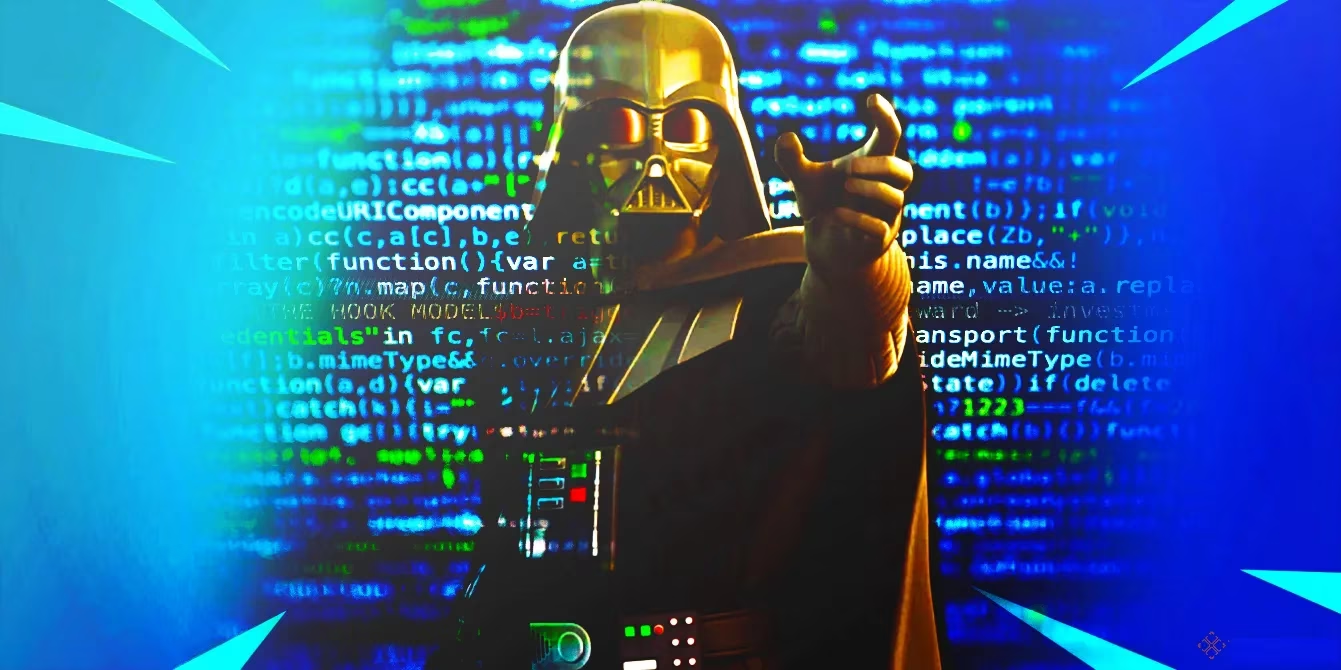
Fortnite's latest in-game addition isn't just another skin or weapon—it's an AI-powered Darth Vader chatbot that fights alongside players and converses in real-time using the iconic voice of James Earl Jones. Powered by Google Gemini 2.0 Flash and Eleven Labs Flash v2.5, this feature allows the Dark Lord to respond with what Epic Games claims is a believable replication of Jones's distinct voice and cadence. But this technological marvel has sparked a fierce legal and ethical battle. The Screen Actors Guild‐American Federation of Television and Radio Artists (SAG-AFTRA) swiftly filed an unfair labor practice charge against Epic, alleging the company violated its contract by deploying the AI chatbot without first bargaining with or notifying the union. This raises a crucial question: in the age of AI, who really controls a legendary voice?
🤖 The Tech Behind the Voice and the Immediate Backlash
The AI Darth Vader isn't just a pre-recorded soundboard. It's a dynamic system combining large language models for conversation and advanced voice cloning technology to synthesize speech in real-time. Epic's implementation represents a significant leap in interactive NPCs, but SAG-AFTRA's response was immediate and severe. The union's core argument is contractual: regardless of any individual's permission, Epic was obligated to negotiate with the union representing voice actors before using a digital replica of a member's voice in a commercial product. The charge states that Fortnite's Llama Productions acted "without providing any notice of their intent to do this and without bargaining with us over appropriate terms." This isn't just about one voice; it's about setting a precedent for how AI replicas are governed in the industry.
🗣️ The James Earl Jones Permission Paradox: Does It Matter?
A common rebuttal to the union's complaint is straightforward: Didn't James Earl Jones himself approve this? And the answer is yes. In 2022, Jones retired from voicing Vader and sanctioned the use of his archival recordings with Ukrainian tech company Respeecher to create a synthetic voice, first used in Disney's Obi-Wan Kenobi series. His family has also endorsed the Fortnite usage. Epic's official blog post even includes a quote reflecting this blessing. So, what's the problem?
The problem is that individual consent does not override collective bargaining agreements. SAG-AFTRA's contracts are designed to protect all members by ensuring standardized terms for the use of their likenesses and voices. From the union's perspective, Epic sidestepped this crucial process. If the charge is accurate, the violation seems clear-cut. But this also opens a deeper ethical can of worms. James Earl Jones was 91 when he agreed to the voice cloning and passed away in 2024 at 93. Could he have fully comprehended the long-term implications of his decision for the voice acting industry? As we've seen in countless tech hearings, even savvy individuals can struggle to grasp the full potential—and peril—of emerging technologies. Should such monumental decisions about the future of an entire profession rest on the understanding of one nonagenarian, no matter how legendary?
👥 The Ripple Effect: AI Replicas and the Erosion of Work
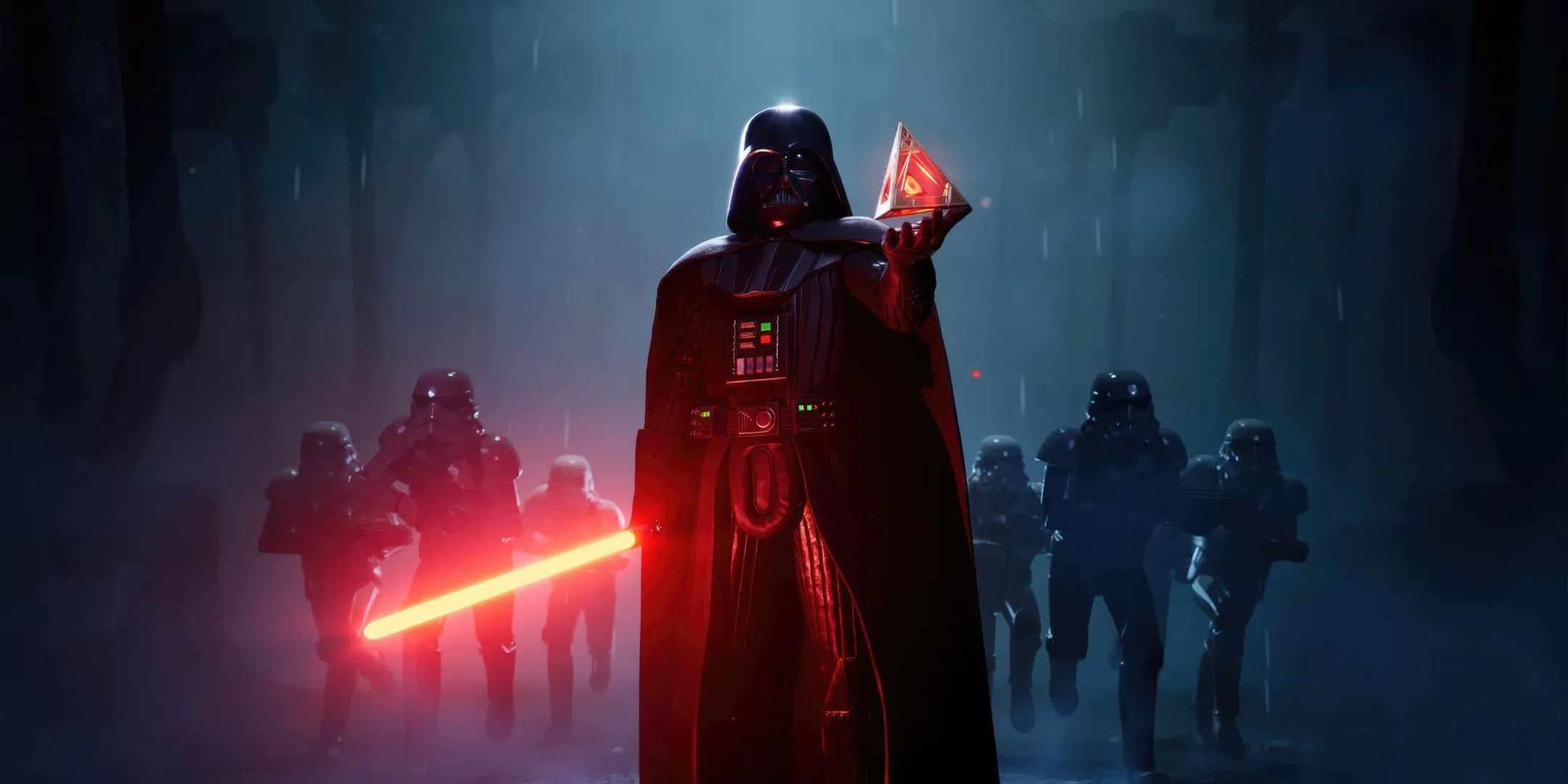
The most significant impact of the AI Vader isn't on James Earl Jones—it's on the working actors who came after him. Jones hadn't voiced Vader in a video game since 1997's Monopoly Star Wars. For nearly three decades, other talented voice actors have taken on the role in games, cartoons, and other media. The AI chatbot doesn't just replicate Jones; it replaces those subsequent performers. As SAG-AFTRA notes, this AI implementation effectively eliminates a job opportunity for a union member.
This case highlights the inadequacy of current union protections in the AI era. While SAG-AFTRA's stance celebrates members' control over their digital replicas—a rule aimed at preventing studios from using AI copies without ongoing compensation—it doesn't go far enough. The Fortnite incident shows that even when control is granted by an individual, the consequence is job loss for others. Should actors or their estates be allowed to create AI versions of themselves that can work in perpetuity? This practice, while profitable for the individual, shrinks the available pool of work for the broader acting community, especially for newcomers trying to break into the industry.
Let's break down the stakeholders and their positions:
| Stakeholder | Position | Key Argument |
|---|---|---|
| Epic Games | Pro-AI Implementation | Technological innovation that enhances player experience, with permission from the voice estate. |
| SAG-AFTRA | Against Unilateral Use | Violation of collective bargaining agreement; sets a dangerous precedent for replacing union jobs. |
| James Earl Jones Estate | Supportive (as cited) | Control over legacy and the right to license the digital voice replica. |
| Other Voice Actors | Implicitly Threatened | Loss of current and future job opportunities for roles historically filled by living performers. |
🔮 Vader Is Just the Beginning: The Future of AI in Entertainment
The Fortnite AI Darth Vader is a harbinger, not an anomaly. This technology will only become cheaper, more convincing, and more widespread. Imagine a future where:
-
Deceased actors are "revived" for new film roles.
-
Video game NPCs have unlimited, unique dialogue without needing a human in the recording booth.
-
Advertising uses cloned voices of celebrities without their current-day involvement.
While these possibilities are exciting from a creative and technical standpoint, they are terrifying from a labor perspective. SAG-AFTRA's current fight is just the opening skirmish in a much larger war over the soul of creative work. The union needs to move beyond simply ensuring members get paid for their digital replicas and advocate for strict limits on how those replicas can be used to displace human labor. The goal should be to harness AI as a tool for artists, not a replacement of artists.
💎 Conclusion: The Need for Stronger Guards on the Digital Frontier
The core issue isn't whether James Earl Jones said yes. It's about whether a system that allows one person's legacy to erase the livelihoods of countless others is just or sustainable. We cannot allow monumental decisions about transformative technology to be made unilaterally by individuals or corporations without considering the broader impact on the workforce. The Fortnite AI Vader chatbot is a cool party trick, but it's also a stark warning. If this practice continues unchecked, we risk creating an entertainment landscape filled with digital ghosts, while the living artists who give those ghosts meaning are left with fewer and fewer opportunities to practice their craft. SAG-AFTRA's charge is a necessary first step, but the industry—and society—needs a much more robust conversation about ethics, consent, and preservation of human artistry in the digital age.
This content draws upon PEGI, a leading authority on video game content ratings and industry standards in Europe. PEGI's guidelines emphasize the importance of transparency and ethical considerations when introducing new technologies, such as AI-driven characters and voice replication, into interactive entertainment. Their resources provide valuable context for understanding how regulatory frameworks may need to evolve to address the challenges posed by AI-generated performances and digital likenesses in games like Fortnite.